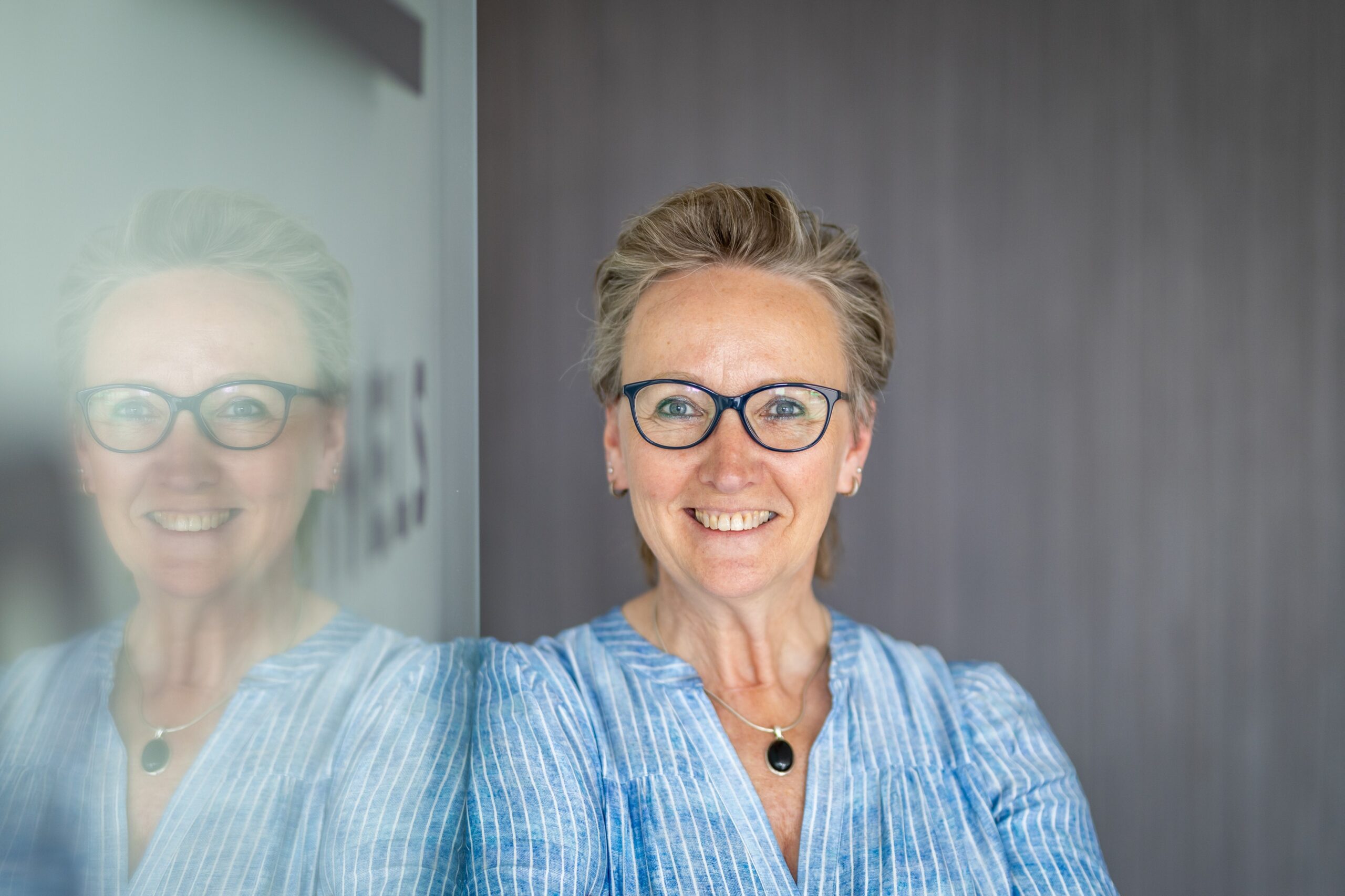
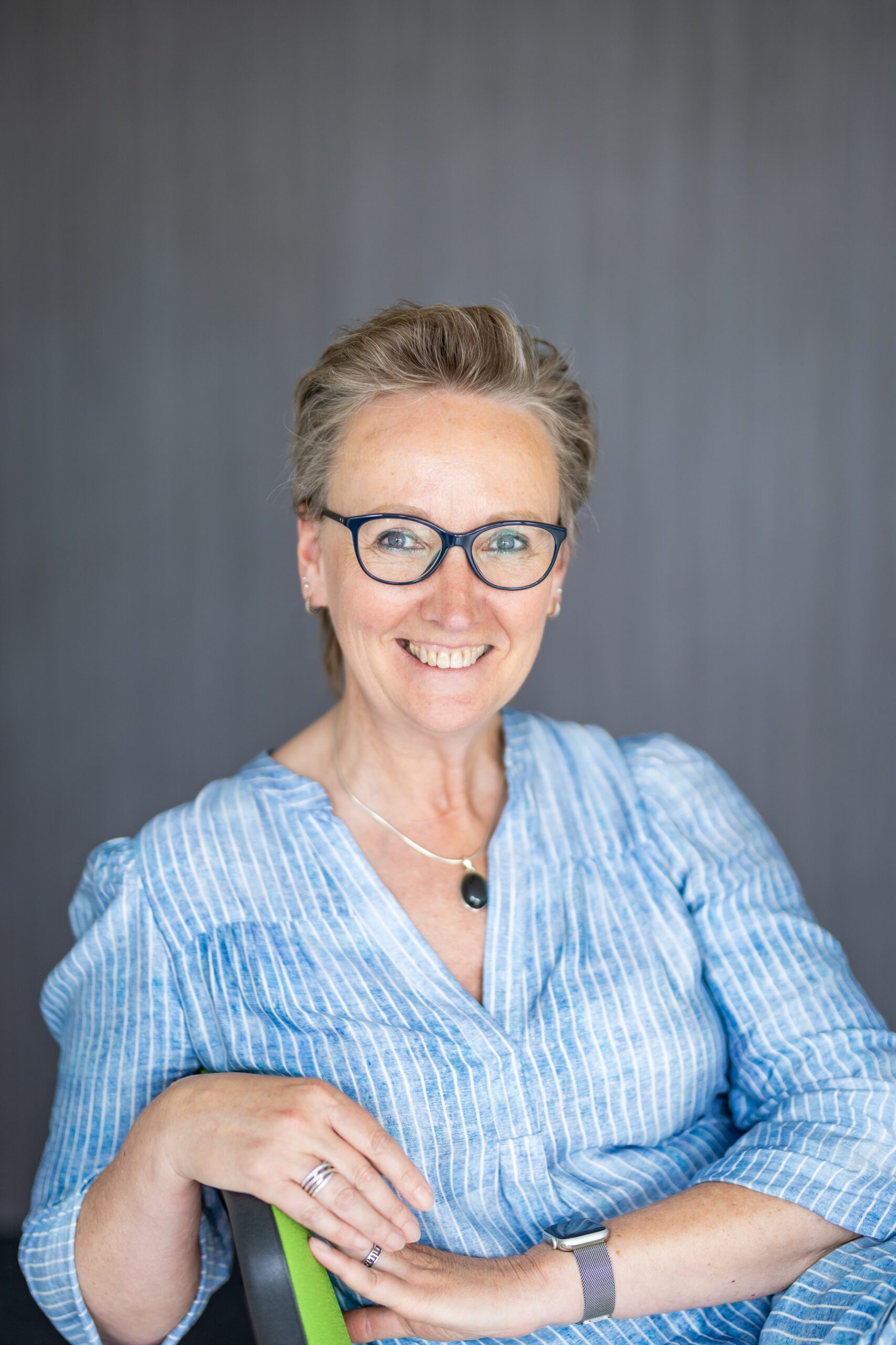
Between Christmas and New Year’s Eve 2018, doctors discovered a tumor in Anne De Middelaer’s cervix. Initially, they feared it was stage 4, but in early 2019, it turned out to be “only” stage 3. “A difference that significantly increased my chances of survival,” Anne says.
Compostela
That relative relief was quickly followed by another blow: further tests revealed a second primary tumor. “I also had thyroid cancer,” Anne explains.
“I told myself, ‘If I can get through this, I’ll walk to Compostela and raise money for an organization that supports women with cervical cancer.’”
The pilgrimage hasn’t happened — yet — and Anne couldn’t find such an organization. “I found one association, but it didn’t accept donations. There was also a private Facebook group for women with gynecological cancer, but that was all.”
During her online search, Anne connected with Maria Papageorgiou, a Greek uterine cancer survivor who was raising awareness about gynecological cancers. On September 20, 2020, Maria posted a photo of herself on social media wearing a World GO Day (World Gynecologic Oncology Day) T-shirt.
“I shared her post in our private Facebook group and immediately received questions from four women: could you get T-shirts like that for us?” Anne recalls.
Five t-shirts
Through Maria, she got in touch with ENGAGe, the European Network of Gynecological Cancer Advocacy Groups. “I didn’t ask for T-shirts, but I told them our story. Two days later, five T-shirts and a whole lot of campaign material were delivered to me.”
Anne personally brought the T-shirts to the women in the group and asked them a question: “I want to set up a non-profit organization. Would you like to join?” All four said yes.
As for the organization’s mission, “We didn’t want to decide that ourselves,” Anne explains. “We asked the 300 to 350 women in the Facebook group what they felt the focus should be.”
“For most, it was clear: raising awareness about gynecological cancers, the importance of preventive screening, and they wanted someone to stand up for them. That became our first mission.”
“Our second mission is to support women and their loved ones in their search for reliable information about their disease and the best care. And thirdly, we are committed to connecting women who have gone through similar experiences, although that is not one of Gynca’s core tasks.”
On December 21, 2020, Anne, Caroline, Eva, Kathleen, and Mariska officially founded the non-profit organization. Annelies, Patricia, Sabine, and Melissa have since joined the team, while Eva and Kathleen have sadly passed away — a loss that is still deeply felt.
Professional approach
From the outset, Gynca’s took a professional approach. “None of us had any experience in advocacy. That’s why we immediately enrolled in a basic training course at Kom Op Tegen Kanker, followed by further training at the Patient Expert Center.”
The hard work paid off. Gynca’s made an impression and was soon invited to round tables and other events. “That helped us get to know the other stakeholders in the story — and they got to know us,” says Anne.
“It was during a round table discussion about HPV that I met Pia [Cox, Executive Director of All.Can Belgium, ed.]. One thing led to another, and Gynca’s is now a member of All.Can Belgium.”
Roadmap in parliament
In February of this year, the non-profit organized a round table in the federal parliament on HPV-related cancers. Together with several other stakeholders, Gynca’s proposed a roadmap to eradicate HPV-related cancers in Belgium by 2030.
Politicians Kathleen Depoorter (N-VA) and Julie Taton (MR) supported the initiative. “Their support was very important,” Anne says gratefully.
“The round table in February wasn’t the end of the story. Since then, we’ve already had consultations with the office of Flemish Minister of Welfare Caroline Gennez, and this month [August, ed.], with the office of her Walloon counterpart Yves Coppieters. The government is clearly taking the fight against HPV-related cancers seriously.”
‘In French-speaking Belgium, women with gynecological cancers currently have no association to represent them.’
Where does Anne hope Gynca’s will be in five years?
“We want to be known throughout Belgium. In French-speaking Belgium, women with gynecological cancers currently have no association to represent them. We want to fill that gap. That’s why we’ll soon be launching a bilingual website and actively campaigning in French-speaking regions.”
“What else do I hope for? That we’ll have one or more people on staff to ensure the continuity of our organization, that we’ll have our own location, that doctors will increasingly contact us spontaneously to ask for our input — you name it. We can dream, can’t we?”
Something tells us it won’t remain just a dream.