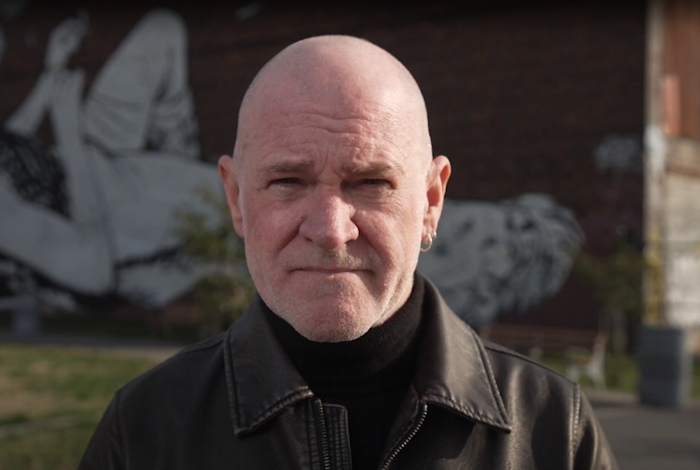
The first results of the ZORALCS study show that organised lung cancer screening is feasible in Flanders and delivers results comparable to those of other European studies.
All.Can is committed to efficiency in cancer care. By working with all stakeholders, we aim to achieve our goal: better health outcomes for cancer patients. This is why we focus on finding, supporting and sharing evidence-based and measurable ways to improve cancer care.


All.Can Belgium is committed to efficiency in cancer care. But what exactly does that mean?
The All.Can Cancer Efficiency Metrics Study (2022) provides an answer to this question. Eight key metrics emerge from this comprehensive international study. These metrics can be used to assess and improve efficiency in cancer care.
All.Can Belgium is committed to efficiency in cancer care. But what exactly does that mean?
The All.Can Cancer Efficiency Metrics Study (2022) provides an answer to this question. Eight key metrics emerge from this comprehensive international study. These metrics can be used to assess and improve efficiency in cancer care.
All.Can Belgium uses these eight parameters to set up and evaluate projects. For example, our ‘Get Checked Early’ campaign emphasises the importance of timely diagnosis and therefore ties in with the first parameter (time to diagnosis).
The first results of the ZORALCS study show that organised lung cancer screening is feasible in Flanders and delivers results comparable to those of other European studies.
For a long time, head and neck cancers were mainly associated with tobacco and alcohol use. Today, however, there is another cause: a virus — human papillomavirus (HPV).
Every year, almost 9,000 women [1] undergo a cone biopsy to treat precancerous lesions. Precancerous lesions are abnormal cells in the cervix that can develop into cervical cancer. They are detected through cervical screening. A cone biopsy is preceded by a colposcopy – a closer examination of the cervix. In…
Anal cancer is rare, almost always linked to HPV, and in many cases preventable — if we detect precancerous lesions in time. In an in-depth interview, Dr. Magali Surmont (UZ Brussels) shares how Belgium is taking action against anal cancer. She points to three key areas where we can truly…
Since January 2025, cervical cancer screening for women aged 30 and over has been carried out differently. The smear is now first tested for the presence of human papillomavirus (HPV), and only then, depending on the result of that first test, are the cells examined. There is a good reason…
All.Can Belgium is pleased to announce the publication of its new white paper: "Measuring what matters: Towards a shared framework for clinically meaningful endpoints in curative oncology". The paper addresses a timely and complex question at the heart of modern cancer care: how can we ensure that the endpoints used…
On December 4, 2025, All.Can Belgium brought together policymakers, clinicians, scientists, patients, and healthcare system stakeholders at the Federal Parliament for a roundtable discussion on innovation in cancer care. The meeting, chaired by federal Member of Parliament and pharmacist Kathleen Depoorter and moderated by Hanne Decoutere, built on the report…
Sweden is well on its way to control the spread of human papillomavirus (HPV) and by doing so, virtually eliminate cervical cancer by 2027. If successful, it would be a historic first: a country eradicating a cancer altogether. How? By doubling down on both HPV vaccination and cervical screening —…
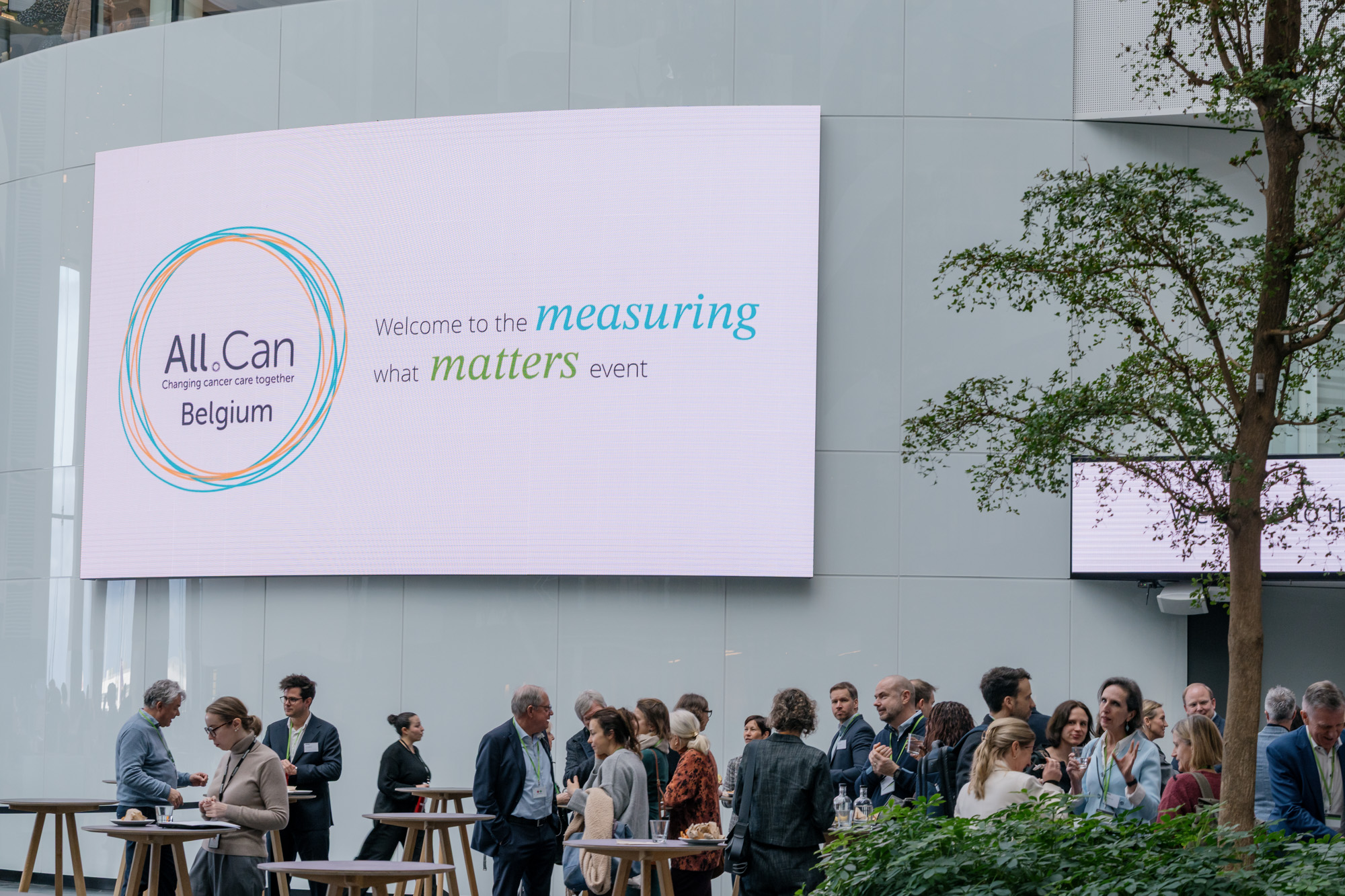
On 16 January 2026, All.Can Belgium convened a multi-stakeholder event in Brussels focused on one central question: how do we define, generate and use endpoints in curative oncology that are truly clinically meaningful for patients, clinicians and decision-makers?
Many women with gynecological cancer feel alone and ashamed. Gynca's wants to change that. The non-profit organization gives them a voice and stands up for their interests. Chair Anne De Middelaer looks back on the past five years — and ahead to the future. “There is still a lot of…
Detecting lung cancer earlier through targeted screening — and thereby improving chances of survival — is the goal of the ZORALCS study, currently underway in six municipalities around Antwerp. People between the ages of 55 and 74 who smoke or used to smoke are being offered a free CT scan.…
The last structured Cancer Plan was introduced in 2008, at a time when there was still no coordinated policy framework for cancer care. In 2025, the question is whether a completely new Cancer Plan is truly necessary. What seems to be needed instead is a process of renewal and reflection.
2024 was a remarkable year for All.Can Belgium in many ways. Our actions attracted considerable attention, particularly from policymakers. In this annual report, we’ve brought everything together for you.
"If I hadn’t come down with flu-like symptoms in the autumn of 2016, I might not be here today." Robert Henkinet shares how a twist of fate led to the timely diagnosis of his bowel cancer – a stroke of luck. But his message is clear: "We can’t rely on…
On February 15, 2025, Johan Thibo passed away. As the founder and president of Prolong vzw, he dedicated many years to supporting people with lung cancer or pleural cancer and their loved ones. Thank you for your energy, Jo.

All.Can Belgium calls on policy makers to consider a national lung cancer screening program. Such a screening program can save lives, and there is both scientific evidence and public support for such a program.

Lina Vissenaeken, principal of a secondary school in East Flanders, has lived with a prosthetic knee for nearly 20 years after being diagnosed with osteosarcoma. “When I'm in pain, I limp, but my students are used to it now,” she says. Together with Cum Cura, a non-profit organization, she advocates…
Belgium is an internationally recognized leader in oncological research. Yet, the wave of innovations has not fully addressed cancer patients' needs. Advances in medication, digital technologies, and artificial intelligence necessitate a fresh perspective and a significant shift in mindset among policymakers and stakeholders in the healthcare sector.
Freya Rowaert (46) was diagnosed with synovial sarcoma, a rare form of cancer, when she was only 23. She has now lived with the disease for half of her life. A few years ago, she founded an online platform for fellow patients. "With 'Klare Kijk Op Kanker' (Clear View On…
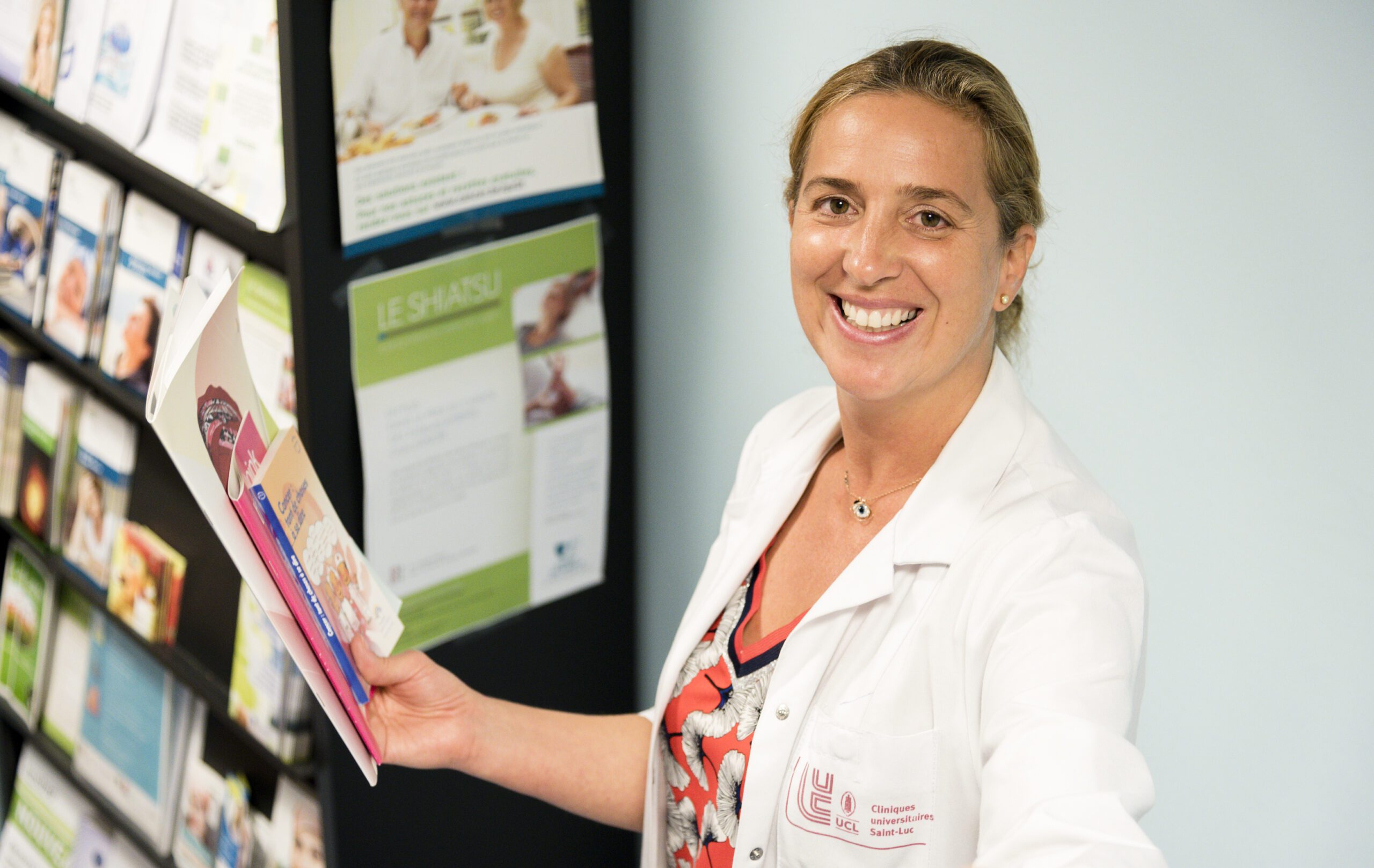
According to feedback that UCL Saint-Luc collected from patients via its “Je Me GèRe” (JMGR) app, fatigue may be the biggest factor indirectly impacting the quality of life of people living with cancer. We talked to Frédéric Maddalena about the app’s impact and the new features that are available since…
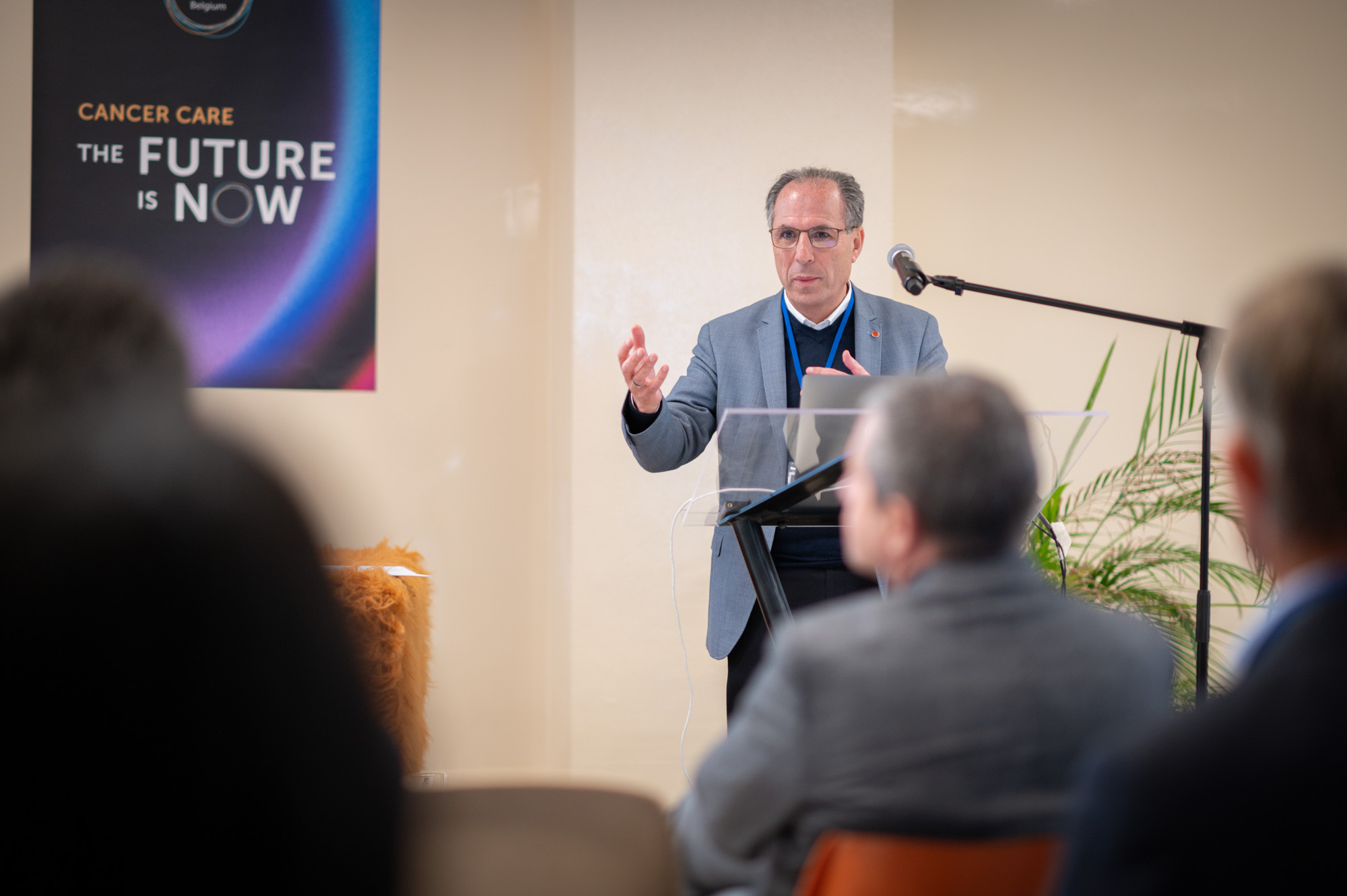
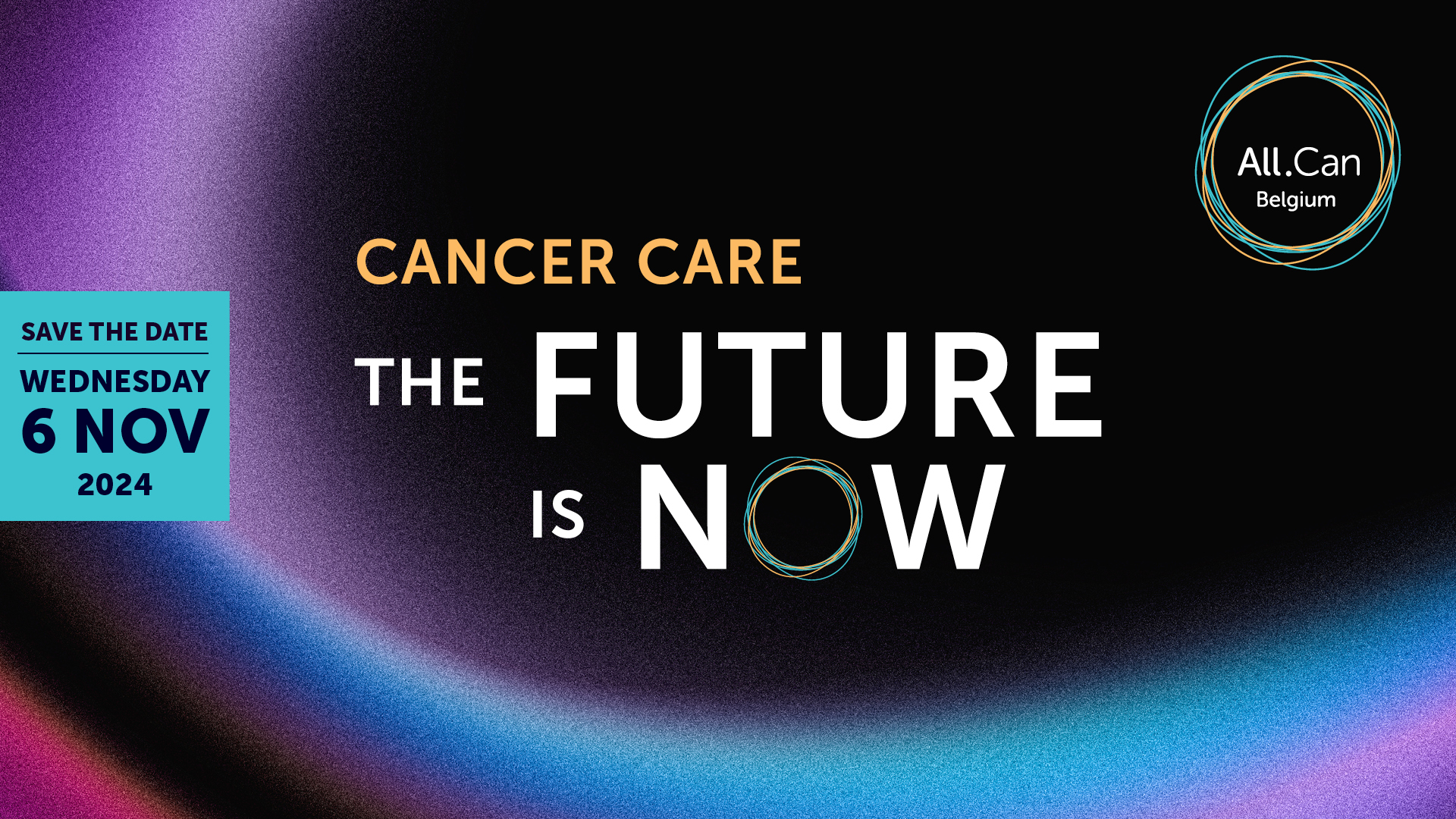
Are you curious about what cancer care in Belgium will look like in the future? Then be sure to mark your calendar for November 6, 2024. On this day, All.Can Belgium will host the conference "Cancer Care: The Future is Now," focusing on the oncological (r)evolution in the 21st century…
Sarcomas are tumours of the bone or soft tissues of the body. Because they are so rare, a lot of healthcare providers fail to recognize the red flags. Prof. Dr. Gwen Sys (Ghent University Hospital) summarizes their main features for her fellow physicians.
Sarcoma patient Eva’s treatment process left much to be desired. The tumor was not identified as malignant until late in the diagnostic process, resulting in a lot of lost time. That's why Eva wants to share her story with others. "I hope other people can learn from it."
When you are diagnosed with cancer, you are faced with 1,001 challenges: not only health-related, but also emotional, social, professional, and economic. As an oncology nurse coordinator, Sylvie Lambin answers her patients' questions and concerns from a professional perspective.
As the elections are approaching, we talked to Professor Dr. Ahmad Awada, Chair of our Board. What is his message for policymakers? "It's impossible to address all cancer care needs simultaneously, which means it's extremely important to focus on efficiency."
Research from Leiden University identifies the needs of patients with cancer and their families. What do they perceive as harmful communication?
Meet Florence – mother, wife, diplomat by profession. And she loves … life.
“Smoking is a silent killer, I finally got hold of him.”
On the 16th of November 2023, the official launch of the Lung Cancer Working Group was celebrated with a symposium coupling lectures on pertinent issues in lung cancer with patient ...
OPTIMOC stands for “optimization of the multidisciplinary oncology consultation (MOC) at Belgian oncology departments”. OPTIMOC is a research project funded by All.Can Belgium that aims to enhance patient-centred treatment decision-making for cancer patients.
July is Sarcoma Awareness Month. A survey conducted by All.Can Belgium shows that raising extra awareness of sarcomas is still much needed.
On the 26th of June, the offices of the Stichting tegen Kanker/Fondation contre le Cancer formed the background for the 2nd general assembly of All.Can Belgium, a multi-stakeholder platform that aims at mobilizing the Belgian cancer care community to engage in specific projects to improve the efficiency of cancer care…
June 15th 2023, we held our kick-off meeting with our new Lung Cancer Working Group , following our principle of representation by multiple stakeholders, supporting efficiency in lung cancer care.