Across all parts of the body, more than 1,000 new cancers each year are directly linked to HPV. Specialists are seeing a significant increase in HPV-related cancers, most notably in the oropharynx — the area around the tonsils and the back of the throat.
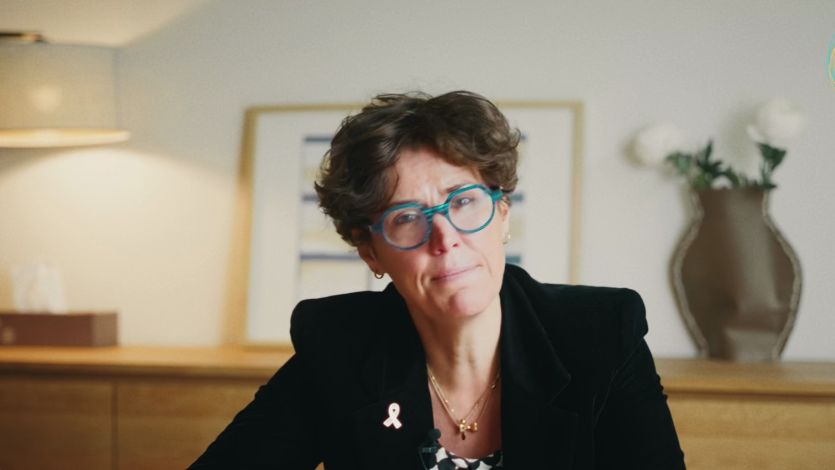
This shift is profoundly changing the profile of patients, the challenges of prevention, and the way care needs to be organised. According to Dr Stéphanie Henry, a medical oncologist at CHU UCL Namur, Sainte-Élisabeth site, specialising in head and neck cancers and gynaecological cancers, it is becoming increasingly important to raise awareness of the early signs of these cancers among both the public and healthcare professionals.
Rare cancers… but strikingly prevalent in some regions
Head and neck cancers remain relatively rare in Belgium, with around 2,700 new diagnoses each year, compared with much more common cancers such as breast cancer (more than 11,600 new diagnoses annually) and prostate cancer (more than 12,400 new diagnoses annually). However, this picture varies considerably depending on the region and socio-economic context.
In her practice, Dr Henry observes that some former industrial and mining areas, which have historically faced greater socio-economic challenges and higher exposure to traditional risk factors such as alcohol and tobacco, remain particularly affected.
But over the past several years, specialists have witnessed a major shift with the emergence of HPV-related oropharyngeal cancers.
A new type of cancer linked to HPV
According to Dr Henry, HPV-related cancers now form a clearly distinct entity from traditional head and neck cancers.
These cancers mainly occur in the oropharynx and are increasingly affecting younger people, sometimes in their thirties or forties, with no traditional risk factors.
“Ten years ago, these cases were still relatively rare in my practice. Today, the number of cancers occurring in the oropharynx has increased, and more than one in three is linked to HPV.”
In her clinical practice, Dr Henry also observes that these cancers often show different biological behaviour and, in many cases, a better prognosis than cancers linked to tobacco and alcohol — although this advantage decreases significantly in people who continue to smoke.
For a comparable stage, outcomes are generally much better in HPV-related tumours. This has even led to the introduction of a new classification specifically dedicated to HPV-induced oropharyngeal cancers.
The rise of HPV-related cancers also makes clear that it is time to move beyond outdated stereotypes about head and neck cancer. “We need to stop thinking that these cancers only affect heavy smokers or people who drink a lot of alcohol. Today, anyone can be affected.”
Human papillomavirus is extremely common, and most people will be exposed to it at some point in their lives. In this context, HPV should first and foremost be viewed as a public health issue rather than a taboo or a source of stigma.
Symptoms that are too easily dismissed
One of the main challenges remains early diagnosis. The first symptoms can appear harmless and may easily be mistaken for a temporary infection or irritation.
Yet Dr Henry consistently stresses the same point: no symptom in the mouth or throat should last longer than three weeks.
The most common warning signs include:
- a persistent sore throat,
- a lump in the neck,
- difficulty swallowing,
- ear pain,
- changes in the voice,
- a sore or ulcer in the mouth that will not heal,
- unexplained weight loss.
HPV-related cancers can sometimes be difficult to detect at an early stage. Some lesions remain hidden in the throat while enlarged lymph nodes have already appeared in the neck.
“Sometimes, there is almost nothing visible to the naked eye. You need to perform systematic biopsies to identify the lesion.”
Dr Henry believes that raising awareness among general practitioners and dentists is also essential to avoid delays in diagnosis. Dentists, in particular, play an important role in recognising persistent lesions in the mouth or problems caused by poorly fitting dental prostheses in older people.
Attention should also be paid to emerging risk factors, including inhaled substances such as cannabis.
Behind the treatments: lives turned upside down
Head and neck cancers affect essential everyday functions such as speaking, eating, swallowing and breathing. They are also highly visible. Although treatments can very often cure people, their long-term consequences can be significant and sometimes disfiguring.
Persistent dry mouth, difficulty swallowing, altered taste, chronic fatigue and voice problems can all have a lasting impact on quality of life.
For younger people, the consequences extend far beyond medical issues. In her practice, Dr Henry regularly sees people who are in the middle of their professional and family lives and who never considered themselves at risk.
Overnight, some find themselves facing months of intensive treatment, with major physical, psychological, social and sometimes professional consequences. These treatments can be especially difficult for people who were previously fit and healthy.
Dr Henry also draws attention to a group that is growing steadily: older and more vulnerable patients. As the population ages, medical teams are seeing more people who already have weight loss, swallowing difficulties, malnutrition or problems related to poorly fitting dental prostheses at the time of diagnosis.
According to her, this development presents oncology and geriatric teams with growing challenges and once again highlights the importance of early diagnosis to minimise the impact of treatment on quality of life.
Earlier diagnosis, better treatment
Early diagnosis remains one of the most important factors in improving the chances of cure and limiting long-term side effects.
When cancer is detected at an early stage, treatment can often be more limited and less aggressive. Today, some specialised teams can offer highly precise surgical procedures, sometimes assisted by robotic technology, helping to preserve quality of life as much as possible.
By contrast, cancers diagnosed at a later stage often require combined treatments involving extensive surgery, radiotherapy, chemotherapy and sometimes immunotherapy.
“The more advanced the cancer, the heavier the treatment becomes and the greater the risk of long-term side effects.”
The right care in the right place
Beyond early diagnosis, concentrating the treatment of head and neck cancers in specialised centres has become a major issue.
Studies show that people treated in experienced centres have better chances of recovery and are more likely to benefit from a multidisciplinary approach tailored to the complexity of these cancers.
“Head and neck cancers are rare and complex diseases. The more cases a centre treats, the better the patient’s chances of recovery.”
According to data from the Belgian Health Care Knowledge Centre (KCE), there is a real risk of poorer outcomes when these cancers are treated in centres that see too few cases each year.
A reorganisation of care is currently being discussed in Belgium, with the aim of concentrating treatment more in specialised reference centres. However, this remains a sensitive issue, as it would require significant changes for many hospitals.
“It also requires political courage.”
According to the specialists involved in these discussions, this reorganisation is essential to improve the quality of care and reduce inequalities between patients.
HPV vaccination: a major public health issue
Prevention also depends on broader HPV vaccination coverage.
Human papillomavirus is extremely common, and most people will be exposed to it during their lifetime. Vaccination remains one of the most effective tools available today to prevent several HPV-related cancers, including certain head and neck cancers, particularly HPV-induced oropharyngeal cancers.
Dr Henry stresses that vaccination is just as important for boys as it is for girls.
“For a long time, HPV was associated only with gynaecological cancers. But boys are affected too, particularly by cancers of the head and neck, penis and anal canal.”
According to Dr Henry, the barriers to vaccination are often more organisational than the result of genuine parental opposition. For many families, the fragmentation of healthcare systems and networks can make the vaccination pathway more complex and difficult to navigate.
“Most parents are in favour of vaccination. The real problem is often organisational. We need to simplify things and have the political courage to put in place systems that are more effective and easier for families to navigate.”
“Never dismiss a persistent symptom”
The final message is simple: listen to your body and seek medical advice promptly if symptoms persist.
“A symptom that lasts longer than three weeks should never be ignored. The earlier we can intervene, the greater the chances of recovery and the better we can preserve a patient’s quality of life.”
For HPV-related head and neck cancers, prevention, vaccination, awareness and early diagnosis can make a major difference — not only in saving lives, but also in helping patients hold on to their daily lives: at home, with their families and at work.