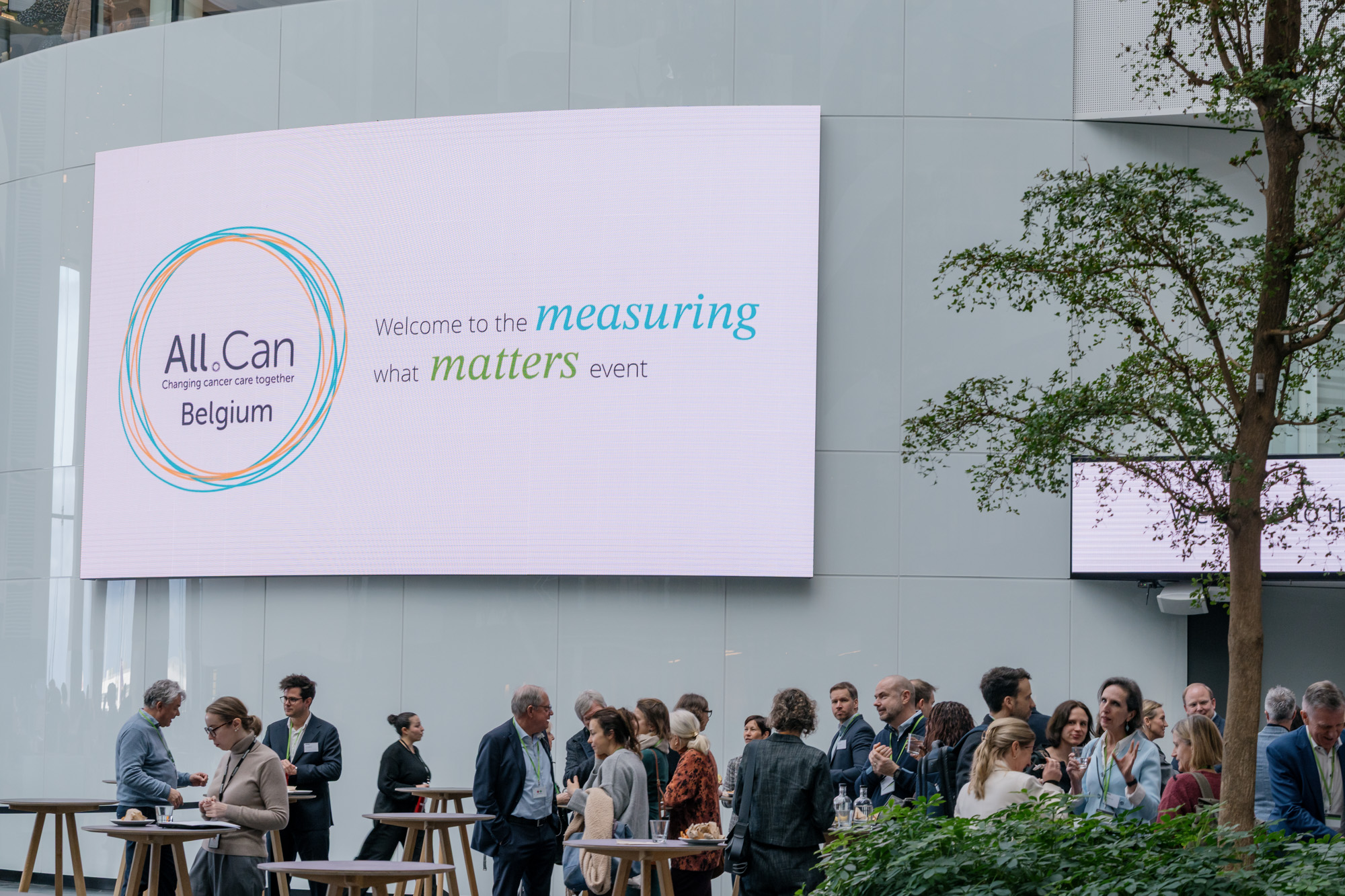
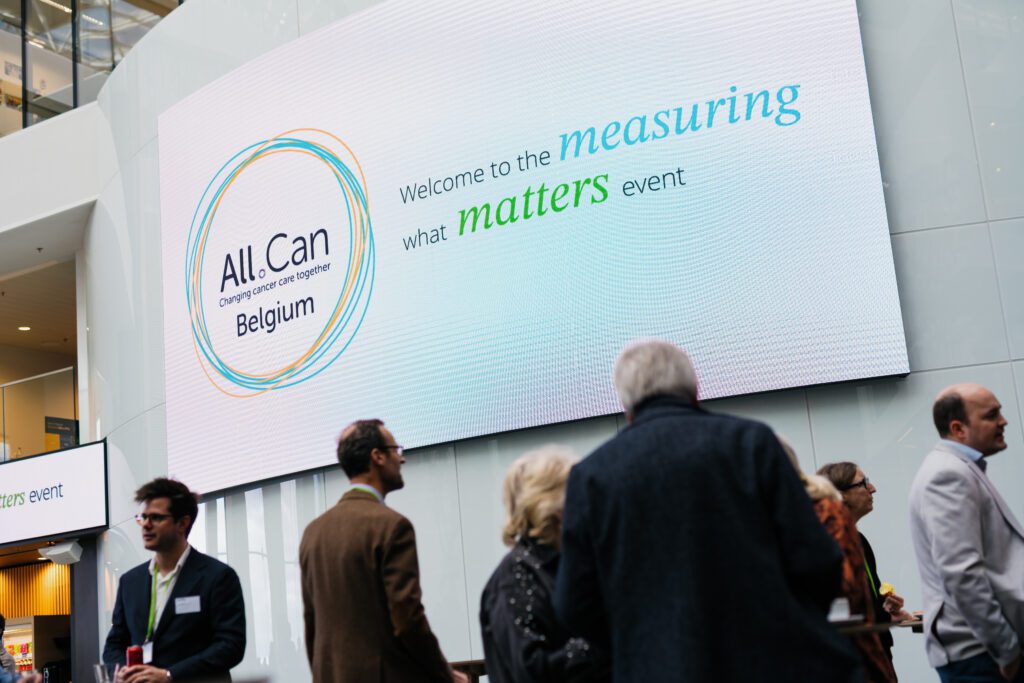
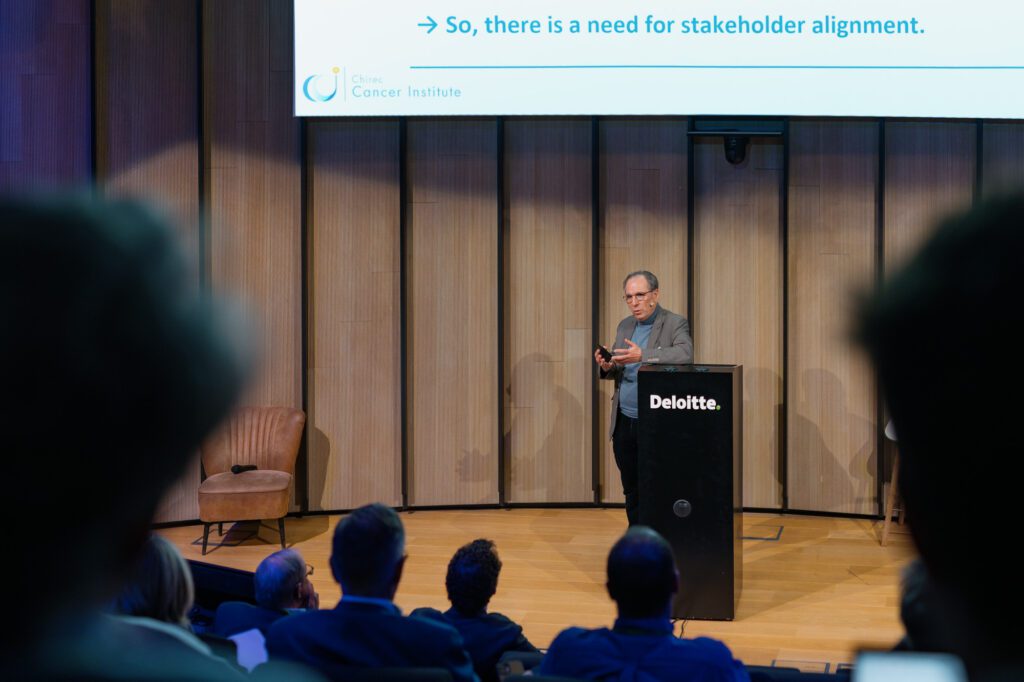
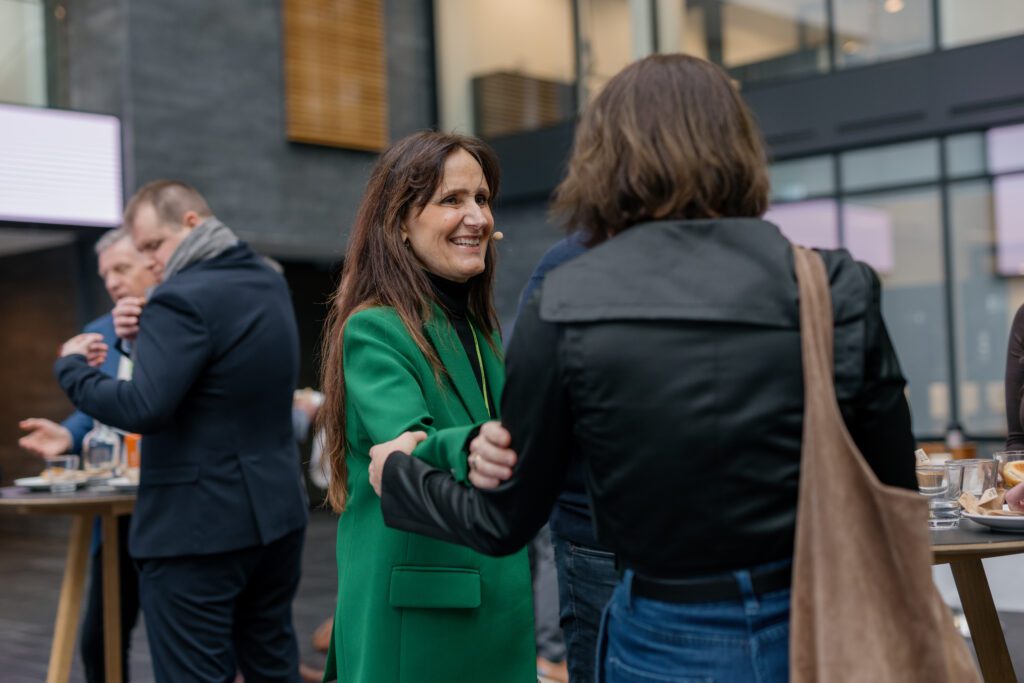
The event brought together policymakers, clinicians, health economists, industry representatives and patient advocates for an in-depth discussion on the role of endpoints in clinical practice, reimbursement decisions and shared decision-making.
Following a welcome lunch, the afternoon opened with a keynote by Prof. Dr. Ahmad Awada (CHIREC Cancer Institute), who highlighted the growing gap between traditional trial endpoints and the realities of modern oncology care. He underlined that clinically meaningful endpoints must go beyond statistical significance and reflect patient-relevant outcomes, including survival, durability of disease control, quality of life, toxicity and long-term side effects. Prof. Awada also stressed that there is no “one-size-fits-all” approach, as meaningfulness depends on tumour type, treatment setting, unmet need and evolving societal expectations.
The patient perspective was brought forward in a fireside chat with André Deschamps (Wij Ook vzw), who emphasised the importance of understanding both short- and long-term side effects and their impact on quality of life when making treatment decisions. Drawing on recent survey work in prostate cancer, he illustrated how high-quality shared decision-making is associated with lower decision regret and better quality of life outcomes for patients.
A second fireside chat with An Cloet (MSD Belgium) explored the challenges of evidence generation in curative oncology, particularly the limited availability of mature overall survival data at the time of regulatory and reimbursement decisions. The discussion highlighted the potential value of intermediate endpoints such as disease-free survival, not only as surrogates for survival but also as outcomes that reflect time without disease, reduced treatment burden and better social and professional reintegration.
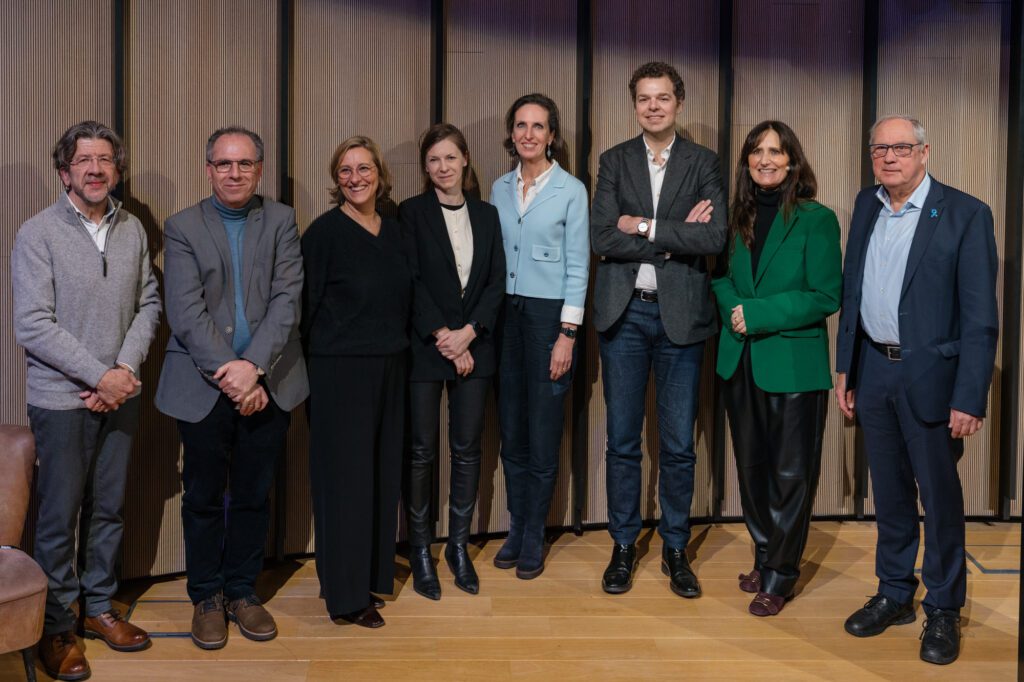
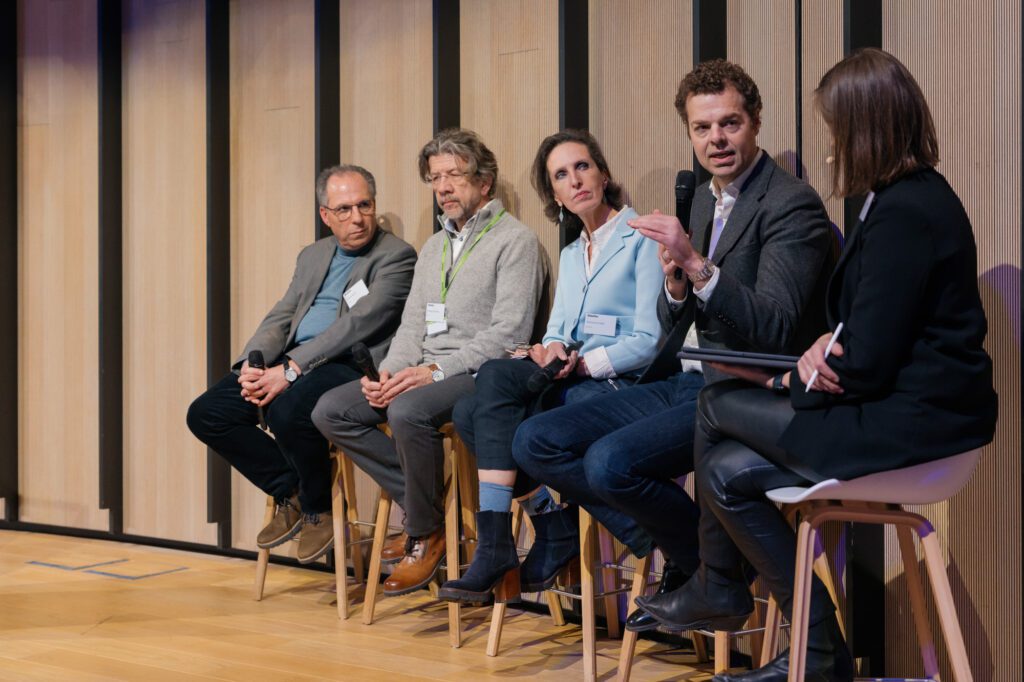
The event concluded with a panel discussion bringing together Pedro Facon (NIHDI/INAMI/RIZIV), Prof. Dr. Ahmad Awada, Patricia van Dijck (pharma.be) and Prof. Philippe Van Wilder (ULB School of Public Health). The panel examined how different stakeholders assess endpoints in curative oncology, the importance of absolute treatment benefits, and the conditions under which quality-of-life and patient-reported outcomes can meaningfully inform decision-making. Participants also discussed practical steps to improve alignment between clinical evidence, payer expectations and patient needs in Belgium.
The discussions reinforced that endpoints are not merely technical parameters, but tools that shape clinical decisions, ethical considerations and the efficient use of healthcare resources. The event closed with a call for continued collaboration to better align stakeholders around clinically meaningful endpoints that support patient-centred, sustainable cancer care in Belgium.